
Student & Exchange Visas: A Complete Guide
- Deepak B
- Dec 13, 2025
- 2 min read

1. What Are Student & Exchange Visas?
These are non-immigrant visas that allow foreign nationals to enter another country for the purpose of:
Student Visa – Enrolling in an accredited academic or vocational institution.
Exchange Visa – Participating in government-approved exchange programs (cultural, academic, professional).
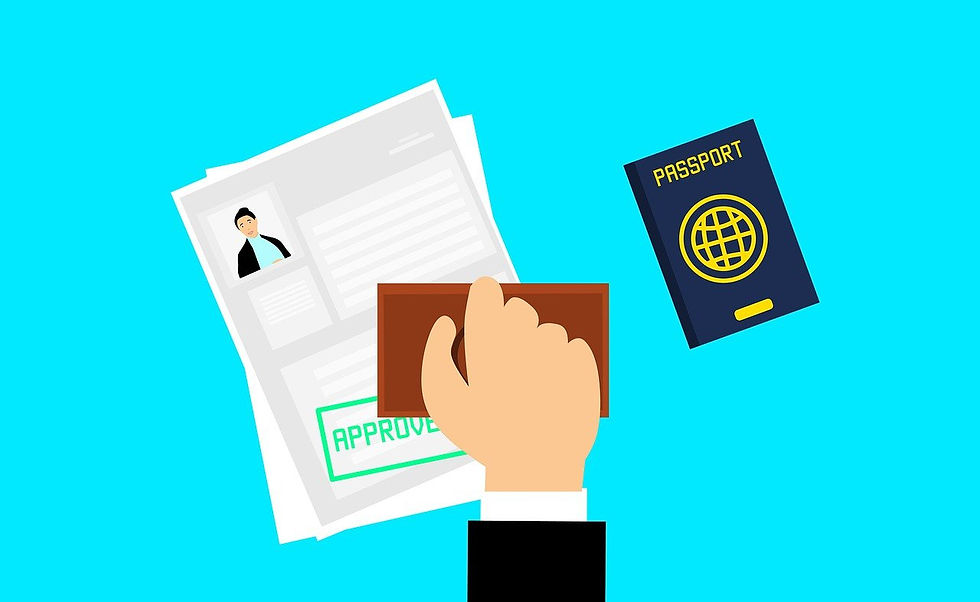
Visa application process illustrated: A stamp of approval on student exchange documents, accompanied by a passport, highlights the steps to secure academic opportunities abroad.
2. Types of Student & Exchange Visas (Focusing on the U.S. Categories)
Visa Type | Category | Purpose | Typical Documents |
F-1 | Academic Student | Full-time academic studies (university, college, high school, language programs). | Form I-20 (Certificate of Eligibility) |
M-1 | Vocational Student | Full-time vocational or non-academic studies (technical school, culinary school, etc.). | Form I-20 (Certificate of Eligibility) |
J-1 | Exchange Visitor | Participation in approved work-and-study-based exchange programs. Categories include Au Pair, Camp Counselor, Intern, Research Scholar, Professor, and College/University Student. | Form DS-2019 (Certificate of Eligibility) |
3. Who Can Apply?
Individuals accepted into a full-time accredited program in the host country.
Participants in approved exchange programs (J-1, etc.).
Those who meet financial, health, and intent requirements.
4. Key Requirements
Valid Passport: Must be valid for at least six months beyond the intended period of stay.
Certificate of Eligibility: The relevant form issued by your school or program sponsor (I-20 for F/M, or DS-2019 for J).
SEVIS Fee Payment: Proof of payment for the Student and Exchange Visitor Information System (SEVIS I-901 Fee).
Financial Capability: Documented proof of sufficient funds to cover tuition, fees, and living expenses for the first year of study, and evidence of accessible funds for the remainder of the program.
Strong Home Ties: Convincing evidence of strong social, economic, or family ties to your home country, demonstrating your intention to return after your studies/program are complete.
Completed Visa Application: The online application form (e.g., DS-160 for the U.S.) and required photo.
5 Application Process (Step-by-Step)
Receive admission from a recognized institution.
Pay the visa application fee and SEVIS fee (for U.S.).
Complete the online visa application form (e.g., DS-160 for U.S.).
Schedule and attend visa interview at embassy/consulate.
Gather Documents: Prepare all required documents, including your passport, forms, financial proofs, and interview confirmation.
Attend Interview: Attend the interview and present your case confidently.
6 Visa Interview Tips
Be clear and confident about your study or exchange plans
Explain why you chose that institution or program
Show strong intent to return after program completion
Carry all required documents in an organized manner
7 Common Reasons for Rejection
Insufficient financial proof
Weak ties to home country
Unclear academic or career goals
Inconsistent or incorrect information
Inadequate knowledge about the chosen program
8 Important Reminders
Arrive early for your interview
Do not carry prohibited items inside the embassy
Ensure all information matches your application documents
Follow embassy security guidelines strictly
Good Luck


Comments